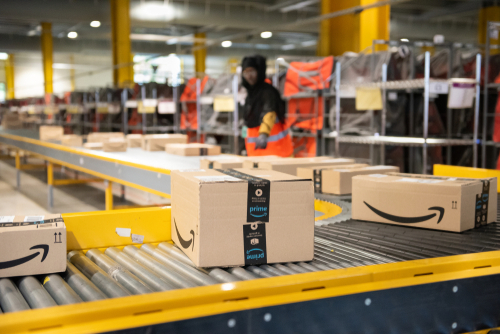
Pennsylvania workers' compensation may cover both sudden workplace injuries and gradual occupational conditions at an Amazon warehouse near York, regardless of who was at fault. That protection depends on acting quickly, though. Prompt notice to your employer, timely medical treatment, and thorough documentation all play a critical role in whether your claim gets accepted without a fight.
At Freeburn Law, we help warehouse workers throughout the York area understand exactly what Pennsylvania law requires after an injury and how to protect a claim from the very beginning. If you were hurt at an Amazon warehouse near York, call (717) 777-7777 to talk with our team.
Report the Injury Before the Notice Clock Creates a Dispute
Report your injury to a supervisor or through Amazon's designated reporting system immediately, in writing when possible. Pennsylvania law generally requires notice of a work injury within 21 days to avoid complications with your claim, with an outer limit of 120 days that carries its own exceptions depending on the circumstances.
When reporting, include the date, the specific tasks you were performing, how the injury happened, and every body part affected, even if some symptoms seem minor at first.
Document a Repetitive Injury Even Without One Accident Date
Not every warehouse injury happens in a single moment. Repetitive strain injuries, common in fulfillment and sortation work, often develop gradually rather than from one identifiable incident.
If this describes your situation, keep a record of your specific tasks and duties, when symptoms first appeared, how they progressed over time, any changes to your rate or quota requirements, your shift patterns, any earlier informal reports you made about discomfort, and the date you first connected your condition to your job duties.
This kind of documentation can matter significantly when there's no single accident date to point to.
Get Medical Care and Protect the Treatment Record
Seek emergency care immediately for any serious injury. For all injuries, make sure your medical provider accurately documents that your condition is work-related, records every affected body part, notes any work restrictions, and details your prescribed treatment. Follow through with every scheduled appointment afterward, since gaps in your treatment record can be used against your claim later.
When Amazon's Provider List Can Control the First 90 Days
Amazon is generally required to post a list of at least six approved medical providers at the facility, and Pennsylvania law can require injured workers to treat with a provider from that list for a specific period, often the first 90 days, after acknowledging the posting in writing. Whether this rule applies to your specific situation depends on the facility's posted list and your acknowledgment of it, so confirm your specific requirements early.
Warehouse Injuries That May Qualify
Amazon warehouse work near York carries a range of injury risks that may qualify for workers' comp benefits, including:
- Lifting and overexertion injuries
- Repetitive motion injuries affecting the back, shoulders, wrists, or hands
- Slips, trips, and falls
- Struck-by incidents involving equipment or falling items
- Equipment-related incidents, including conveyor systems and powered industrial trucks
- Heat-related illness
- Hearing loss from prolonged noise exposure
- Respiratory issues connected to workplace exposure
- Aggravation of a preexisting condition due to work activities
Benefits Pennsylvania Workers' Comp May Provide
Pennsylvania workers' comp can potentially provide reasonable and necessary medical care related to your injury, wage-loss benefits if you're unable to work or working at reduced capacity, specific-loss benefits for certain permanent injuries, and death benefits in fatal cases. Your specific benefit rate depends on your average weekly wage and other individual factors that require a case-specific calculation.
What Happens When Light Duty Pays Less or Exceeds Restrictions
If Amazon offers you light-duty work, that offer needs to fall within your documented medical restrictions. Light duty that pays less than your regular wages can still entitle you to partial wage-loss benefits covering the difference.
If a light-duty offer seems to exceed your restrictions, report this immediately to both your medical provider and your employer, and get legal advice before refusing an assignment, since refusing work without guidance can jeopardize your benefits.
The Claim Documents to Watch for in the First Weeks
In the weeks following your injury, watch for several important documents, including a Notice of Compensation Payable, a Notice of Temporary Compensation Payable, a Notice of Denial, and a statement of your wages used to calculate your benefit rate. Pay close attention to the exact description of your accepted injury on any of these documents, since a narrow or inaccurate description can limit what treatment and benefits are covered going forward. You can review the general flow of a Pennsylvania workers' compensation claim for more detail on this process.
If Amazon or the Insurer Denies, Delays, or Narrows the Claim
If your claim is denied, delayed, or accepted with a narrower injury description than what actually happened, you generally have options, including filing a claim petition, submitting supporting medical evidence, and pursuing litigation or mediation if necessary. Be aware that insurers sometimes use surveillance or independent medical examinations (IMEs) as part of disputing a claim.
Pennsylvania generally allows petitions to be filed within a three-year period, though the specific timing rules that apply to your situation should be confirmed with an attorney rather than assumed.
Call Freeburn Law Before the Warehouse Record Goes Cold
Warehouse surveillance footage, witness memories, and internal incident records can all become harder to obtain the longer you wait after an injury. Amazon facilities generate enormous amounts of operational data, and knowing what to request, and how quickly, can make a real difference in your case.
Freeburn Law has spent years helping injured workers throughout Central Pennsylvania, including those working at Amazon facilities near York, get the medical treatment and financial compensation they deserve. We know how to preserve video and witness evidence, address medical-provider compliance issues, calculate accurate benefit rates, fight back against denials, and screen for potential third-party claims beyond your employer. There's never a fee unless we recover money for you. If there's no recovery, there's no fee.
Our Amazon warehouse injury lawyers and York workers' compensation attorneys are ready to help, whether your case involves a repetitive strain injury or another form of manual labor injury.
Request a free workers' comp review with Freeburn Law at (717) 777-7777 today.
York Amazon Workers' Compensation FAQs
Do I have to prove Amazon was negligent to receive workers' comp?
No. Pennsylvania workers' compensation is generally a no-fault system, meaning you don't need to prove Amazon did anything wrong to receive benefits. You do, however, still need to establish that you were in an employment relationship covered by the system and that your injury or condition qualifies for coverage under the law.
Can I file for a back or shoulder injury that developed over time?
Yes, potentially. Repetitive strain injuries affecting the back, shoulders, or other body parts can qualify for workers' comp benefits, but these claims generally require strong medical evidence establishing causation, along with careful documentation of your tasks and the onset and progression of your symptoms over time.
What if a staffing agency issued my paycheck?
This can complicate who your legal employer is for workers' comp purposes. Whether Amazon, a staffing agency, or both bear responsibility for your claim depends on the specific facts of your working arrangement and shouldn't be assumed either way. This is an area that benefits from a careful, case-specific review.
Can I have both workers' comp and a third-party injury claim?
Yes, potentially. If a party other than your employer, such as an equipment manufacturer or another company working at the facility, contributed to your injury through their own negligence, you may have a separate claim against that party in addition to your workers' comp benefits. These situations can involve subrogation and coordination issues that require careful legal guidance to sort out properly.