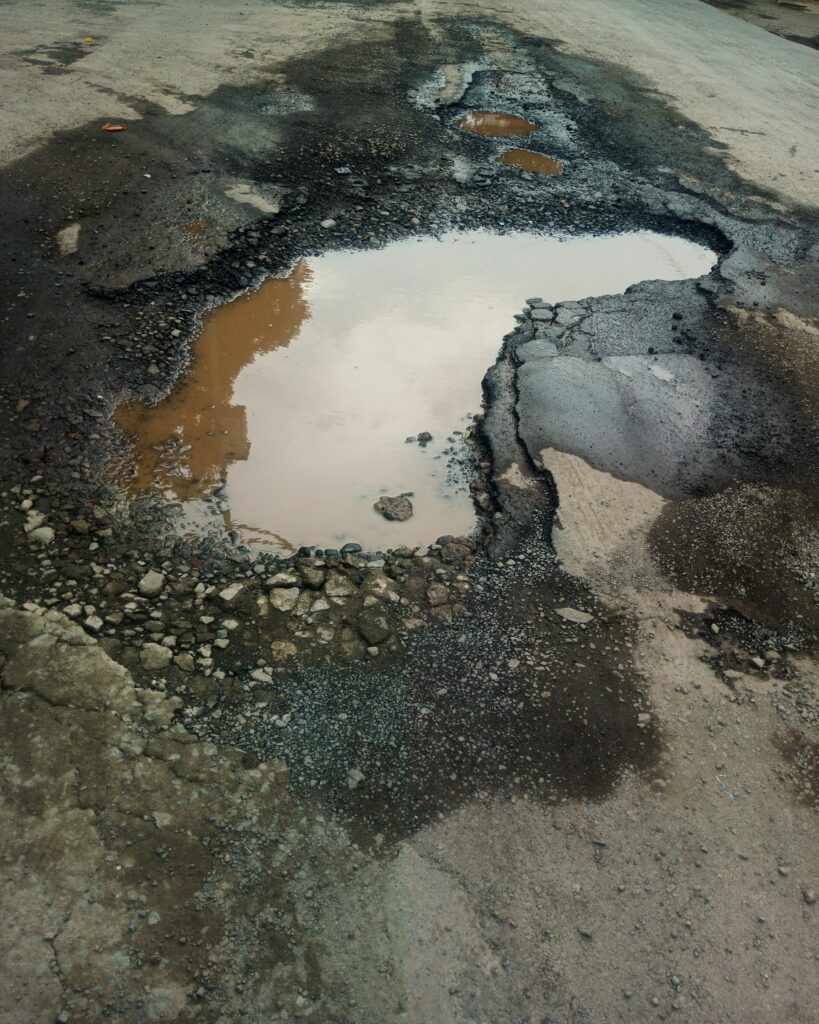
A serious crash does not always happen because another driver was careless. In many cases, the road itself is the problem. Large potholes, loose debris, faded lane markings, broken guardrails, poor drainage, and missing warning signs can all turn an ordinary drive into a dangerous situation. When that happens, injured drivers are often left with the same question: who is responsible?
If you were hurt because of dangerous road conditions, you may have legal options. These claims can be more complicated than a typical crash case, especially when a government agency may be involved, but that does not mean recovery is impossible. A skilled personal injury lawyer can help investigate what happened, identify the liable party, and pursue compensation for your losses.
What Are Road Hazards?
Road hazards are dangerous conditions on or near the roadway that increase the risk of an accident. Some hazards appear suddenly, while others develop over time because of neglect, poor planning, or lack of maintenance. In either case, they can create serious safety risks for drivers, passengers, motorcyclists, bicyclists, and pedestrians.
A road hazard may affect how a vehicle moves, how much time a driver has to react, or how clearly the roadway communicates safe travel. Even a cautious driver can lose control when confronted with a dangerous condition that should have been repaired or clearly marked.
Common Examples of Road Hazards in Pennsylvania
Pennsylvania drivers face a wide range of roadway dangers, particularly during freeze-thaw cycles, severe weather, and periods of heavy traffic. Some of the most common examples include:
- Potholes and crumbling pavement
- Loose gravel, fallen cargo, or roadway debris
- Uneven lanes or dangerous drop-offs at construction sites
- Missing, damaged, or hard-to-read traffic signs
- Inadequate warning signs before sharp curves or merges
- Broken traffic signals or malfunctioning lights
- Poor drainage that causes standing water or ice
- Faded lane markings and poorly visible crosswalks
- Unsafe road design, including blind curves or confusing intersections
- Damaged guardrails, shoulders, or medians
These hazards may seem minor until they cause a driver to swerve, hydroplane, lose traction, or collide with another vehicle.
How Poor Infrastructure Causes Accidents
Poor infrastructure contributes to accidents by making roads less predictable and less safe. Drivers rely on roadway design and maintenance to guide their decisions. When the road does not provide safe conditions, the chance of a crash rises significantly.
A damaged or poorly maintained road may reduce tire grip, interfere with braking, or force a sudden evasive maneuver. Likewise, a missing sign or confusing lane pattern can leave drivers with too little time to react safely. In some cases, poor infrastructure does not directly cause the crash but plays a major role in making a collision worse.
Potholes, Debris, and Unsafe Road Design
Potholes are one of the most common road hazards in Pennsylvania. Striking a deep pothole can cause tire blowouts, broken suspension parts, steering problems, or total loss of control. For motorcycles, bicycles, and smaller vehicles, potholes can be especially dangerous.
Debris is another serious issue. A piece of tire tread, unsecured cargo, construction material, or fallen tree limb can force a driver into another lane or into the path of oncoming traffic. Sometimes debris comes from another vehicle, but in other cases it remains on the road because the responsible party failed to remove it. Call
Unsafe road design can also be a hidden factor in many wrecks. Roads with blind intersections, poor lighting, inadequate shoulders, dangerous curves, or poorly planned merges may increase the risk of collisions even when drivers are paying attention. If the road was designed or maintained in a way that created a foreseeable danger, liability may exist.
Many of these incidents overlap with broader car accidents claims, but road hazard cases often require a deeper investigation into who controlled the roadway and whether they failed to correct a dangerous condition.
Who Is Responsible for Road Hazards in PA?
Liability for road hazards in Pennsylvania depends on the source of the danger and who had a duty to address it. In some situations, a private party is responsible. In others, the liable party may be a local municipality, a state agency, or a contractor working on the road.
Possible liable parties may include:
- A city, township, or county responsible for local roads
- The Pennsylvania Department of Transportation (PennDOT)
- A private construction company or road maintenance contractor
- A property owner whose negligence contributed to debris or runoff
- A trucking company or driver who allowed cargo to fall into the road
- A manufacturer, in rare cases involving defective roadway materials or equipment
To hold someone accountable, you generally must show that they knew or should have known about the hazardous condition and failed to fix it, warn about it, or otherwise protect the public.
Government Liability and PennDOT Responsibility
Many roads in Pennsylvania are owned or maintained by government entities. That can include PennDOT, counties, cities, boroughs, and townships. If a dangerous road condition exists on a public road, one of these entities may be responsible for repairs, inspections, or warning signage.
However, claims against government bodies are not handled like ordinary injury claims. Government agencies often have legal protections known as sovereign immunity or governmental immunity. These protections can make it harder to sue unless your case falls within a recognized exception.
Even when an exception applies, the injured person usually must meet strict notice requirements and shorter deadlines. There may also be limits on the damages that can be recovered. Because of these legal barriers, it is important to act quickly and speak with an attorney as soon as possible.
Can You Sue for an Accident Caused by Road Conditions?
Yes, in some situations you can sue for an accident caused by road conditions in Pennsylvania. The success of the claim depends on the facts, including who was responsible for the roadway, what caused the hazard, how long it existed, and whether the liable party had notice.
For example, if a municipality knew about a dangerous pothole for weeks and failed to repair it, that may support a claim. If a contractor created an unsafe construction zone without proper warnings, that may also lead to liability. If a truck dropped debris into the roadway, the trucking company may be responsible for resulting injuries.
Still, these cases are rarely straightforward. Insurance companies and government lawyers may argue that the hazard was open and obvious, that the driver should have avoided it, or that there was not enough time to repair the condition.
Challenges of Filing Claims Against Government Entities
Claims against government entities come with unique obstacles, such as:
- Immunity defenses
- Strict filing procedures
- Short notice deadlines
- Disputes over whether the agency had actual or constructive notice
- Arguments that weather or another driver was the true cause of the crash
- Caps or restrictions on damages in some cases
This is why strong documentation matters. The earlier you begin building your claim, the better your chances of preserving key evidence before the condition changes or repairs are made.
If your crash involved a public roadway, an attorney familiar with Pennsylvania Motor Vehicle Accidents can help determine whether a government exception may apply and what procedural steps must be taken.
What Evidence Is Needed to Prove a Road Hazard Claim?
Evidence is critical in any road hazard case because the dangerous condition may disappear quickly. A pothole may be filled, debris may be removed, and warning signs may be installed after the accident. Without proof of what the roadway looked like at the time of the crash, it can be much harder to hold the responsible party accountable.
To prove a road hazard claim, you may need to show:
- The exact hazardous condition that caused the accident
- Where and when the crash happened
- That the condition was unreasonably dangerous
- That the responsible party knew or should have known about it
- That the hazard directly contributed to your injuries and losses
Photos, Maintenance Records, and Witnesses
Useful evidence may include:
- Photos or videos of the road hazard, your vehicle, and the accident scene
- Dashcam footage
- Police reports
- Repair estimates for your vehicle
- Medical records documenting your injuries
- Statements from eyewitnesses or passengers
- 911 recordings
- Maintenance logs, inspection reports, or prior complaints
- Construction records or work zone plans
- Expert analysis from accident reconstruction specialists or engineers
In many cases, maintenance records are especially important. They may show whether the government agency or contractor was aware of the problem, whether previous complaints were made, or whether repairs were delayed.
An attorney can also help send preservation letters to prevent important records from being lost or destroyed.
What Compensation Can You Recover?
If a road hazard caused your accident, you may be able to recover compensation for both financial and non-financial losses. The amount depends on the severity of your injuries, the impact on your life, and the legal rules that apply to the defendant.
Medical Bills, Vehicle Damage, and Lost Wages
Potential compensation may include:
- Emergency room and hospital expenses
- Follow-up treatment and rehabilitation
- Medication and medical equipment costs
- Future medical care
- Lost wages from missed work
- Reduced earning capacity
- Vehicle repair or replacement costs
- Out-of-pocket expenses related to the accident
- Pain and suffering
- Emotional distress
- Loss of enjoyment of life
In some situations, property damage may be the most immediate concern, especially when a pothole or road defect damages your tires, rims, suspension, or undercarriage. In more serious crashes, however, the long-term costs of physical injuries can far exceed the damage to your vehicle.
What to Do After an Accident Caused by Poor Road Conditions
What you do after the accident can make a major difference in your ability to pursue a claim. Because road hazard evidence can disappear quickly, taking the right steps as soon as possible is important.
Steps to Protect Your Claim
After an accident caused by poor road conditions, try to:
- Get to safety and call 911 if anyone is injured.
- Report the accident to law enforcement.
- Take photos and videos of the hazard, the road, your vehicle, and surrounding signs or landmarks.
- Get names and contact information for witnesses.
- Seek medical care right away, even if symptoms seem minor.
- Avoid making statements that could be used against you later.
- Keep records of repairs, treatment, and missed time from work.
- Contact an attorney before speaking in detail with an insurer or government representative.
You should also write down everything you remember while it is still fresh. Small details, such as weather conditions, lighting, traffic, or whether other drivers encountered the same hazard, may become important later.
When to Contact a Pennsylvania Personal Injury Lawyer
You should contact a lawyer as soon as possible after a road hazard accident, especially if a public entity may be involved. These cases often require immediate investigation, prompt evidence collection, and careful attention to legal deadlines.
An attorney can help by:
- Identifying who owned or maintained the roadway
- Investigating whether prior complaints or repair requests existed
- Gathering records and witness statements
- Working with experts to prove how the hazard caused the crash
- Handling communications with insurers and government agencies
- Calculating the full value of your damages
- Filing your claim on time and in the correct manner
Road hazard cases can feel overwhelming because the liable party is not always obvious. You may know you were hurt by a dangerous road, but not whether responsibility lies with PennDOT, a local municipality, a contractor, or someone else entirely. That is where experienced legal help matters most.
If you were injured because of dangerous road conditions, missing signage, potholes, or poor infrastructure, do not assume you have no options. Our team at Freeburn Law can review your situation, explain your rights, and help you pursue compensation.
To get started, Contact Freeburn Law or call (717) 777-7777 today.