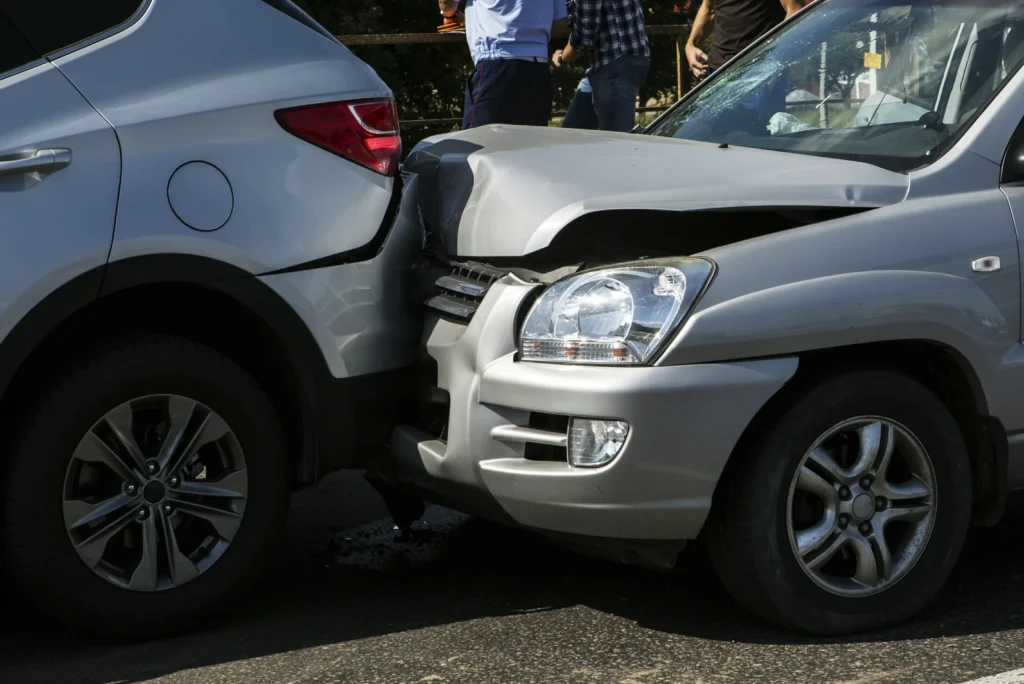
In most Pennsylvania rear-end collisions, the rear driver is found at fault, because drivers are required to keep a safe following distance and be able to stop safely. But fault isn’t automatic. A front driver who stops suddenly without reason, cuts into a lane without enough space, or leaves a disabled vehicle unlit in traffic may share responsibility. Under Pennsylvania’s comparative negligence law, the way fault is divided can directly affect how much compensation an injured driver can recover.
At Freeburn Law, our Harrisburg personal injury attorneys help people throughout Central Pennsylvania pursue full and fair compensation after rear-end crashes. If you were hurt, call (717) 777-7777 for a free confidential consultation.
The Rear Driver Is Often at Fault, but Not Automatically
Rear-end collisions are among the most common types of crashes, and insurers often start with the assumption that the rear driver is responsible. That assumption makes sense in many cases, since the rear driver is usually in the best position to see traffic ahead and react.
However, Pennsylvania doesn’t have a rule that makes the rear driver automatically liable in every case. Fault depends on what each driver did, the road conditions, and the evidence. Sometimes, both drivers share responsibility. In multi-vehicle chain-reaction crashes, several drivers may share fault.
Pennsylvania’s Following-Distance Rule
Under 75 Pa.C.S. § 3310, a driver may not follow another vehicle more closely than is reasonable and prudent, considering the speed of the vehicles, traffic, and the condition of the road. Pennsylvania law also generally requires drivers to travel at a speed that allows them to stop within the assured clear distance ahead.
Why Stopping Distance Depends on Speed and Conditions
There’s no single “correct” following distance for every situation. Stopping distance increases with speed, and it increases even more on wet, snowy, or icy roads, in heavy traffic, or when visibility is poor. A distance that may be safe on a dry, clear day could be dangerously close on a winter morning on I-81 or the Harrisburg Beltway. Drivers who don’t adjust for conditions may be found negligent if they can’t stop in time.
Situations Where the Front Driver May Share Fault
While the rear driver is often responsible, the front driver’s conduct can also contribute to a crash.
Sudden Stops, Unsafe Lane Changes, and Disabled Vehicles
The front driver may share fault in situations such as:
- Sudden, unnecessary stops: Pennsylvania law generally requires drivers to signal before stopping or suddenly slowing when there’s an opportunity to do so. Slamming on the brakes for no reason, or to cause a crash, may shift some fault.
- Unsafe lane changes: A driver who cuts in front of another vehicle without leaving enough space may be responsible if the rear driver has no time to stop.
- Broken brake lights: If brake lights don’t work, the rear driver may not have warning that the vehicle ahead is stopping.
- Disabled vehicles: A vehicle stopped in a travel lane at night without hazard lights or other warnings may create a dangerous situation.
- Reversing: A front driver who suddenly backs up into the vehicle behind them may be at fault.
- Impaired or distracted driving: Erratic driving by the front driver may contribute to a collision.
Each situation depends on the evidence. A front driver’s mistake doesn’t automatically excuse a rear driver who was following too closely or not paying attention.
How Pennsylvania Comparative Negligence Works
Pennsylvania follows a modified comparative negligence rule under 42 Pa.C.S. § 7102. Under this rule:
- You can recover if you’re not more at fault: An injured person can recover damages as long as their negligence isn’t greater than the combined negligence of the defendants.
- Your recovery is reduced by your share of fault: If you’re found 20% at fault and your damages total $100,000, you could recover $80,000.
- You can’t recover if you’re more at fault: If you’re found 51% or more responsible, you generally can’t recover from the other parties.
Because even a small shift in fault can change your recovery, insurers often look for ways to blame the injured person. Strong evidence can help protect your claim.
Evidence That Can Prove How the Crash Happened
Evidence that may help establish fault includes:
- Vehicle damage: The location and severity of damage can show the angle and force of impact.
- Dashcam and surveillance video: Footage from vehicles, traffic cameras, or nearby businesses.
- Witness statements: Accounts from other drivers and bystanders.
- Event data recorders: Data showing speed, braking, and acceleration before impact.
- Police reports: Officer observations, diagrams, and any citations.
- Photos of the scene: Road conditions, skid marks, and traffic signals.
- Phone records: Evidence of distraction, when relevant.
Some of this evidence, especially video, can disappear quickly, so acting promptly is important. Crash data from PennDOT’s crash facts and statistics also shows how common and dangerous these crashes can be across the state.
Insurance Issues After a Rear-End Collision
After a rear-end crash in Pennsylvania, your own auto policy generally provides first-party medical benefits regardless of who was at fault. These benefits can help pay medical bills, though they may be limited compared with the costs of a serious injury.
Your tort option also matters. If you chose full tort, you can generally pursue the at-fault driver for pain and suffering. If you chose limited tort, you generally must show a serious injury to recover non-economic damages, although exceptions may apply. Rear-end collisions often cause neck and back injuries, such as whiplash, and insurers may argue these injuries are minor. Consistent medical treatment and documentation can help counter those arguments.
Most Pennsylvania car accident lawsuits must be filed within two years. Learn more about how our Pennsylvania car accident lawyers handle these claims.
Talk With Freeburn Law After a Pennsylvania Rear-End Crash
Freeburn Law is a leading accident, workers’ compensation, and personal injury law firm in Harrisburg serving residents throughout Central Pennsylvania. We focus on helping injured people get the medical treatment and financial compensation they deserve after a serious accident. Our attorneys handle a wide range of personal injury practice areas and personal injury claims, from car and tractor-trailer crashes to slip and fall accidents and wrongful death cases.
We take the time to listen to your concerns and develop a strategy built around your case. When insurers try to shift blame after a rear-end collision, we gather the evidence needed to show what really happened and fight to protect your right to full and fair compensation. There’s never a fee unless we recover money for you. If there’s no recovery, there’s no fee.
Don’t take on the insurance companies alone. Contact Freeburn Law at (717) 777-7777 for a free confidential consultation.
Frequently Asked Questions
Is the rear driver always liable in Pennsylvania?
No. The rear driver is often found at fault, but the front driver may share responsibility for sudden, unnecessary stops, unsafe lane changes, broken brake lights, or other unsafe conduct.
Can I recover if I was partly at fault?
Yes, as long as your share of fault isn’t greater than the combined fault of the other parties. Your compensation will be reduced by your percentage of fault.
What if my pain started the day after the crash?
Delayed pain is common after rear-end collisions, especially with neck and back injuries. Get medical care as soon as you notice symptoms, and tell your provider about the crash. Prompt treatment helps protect your health and creates a record connecting your injuries to the accident.